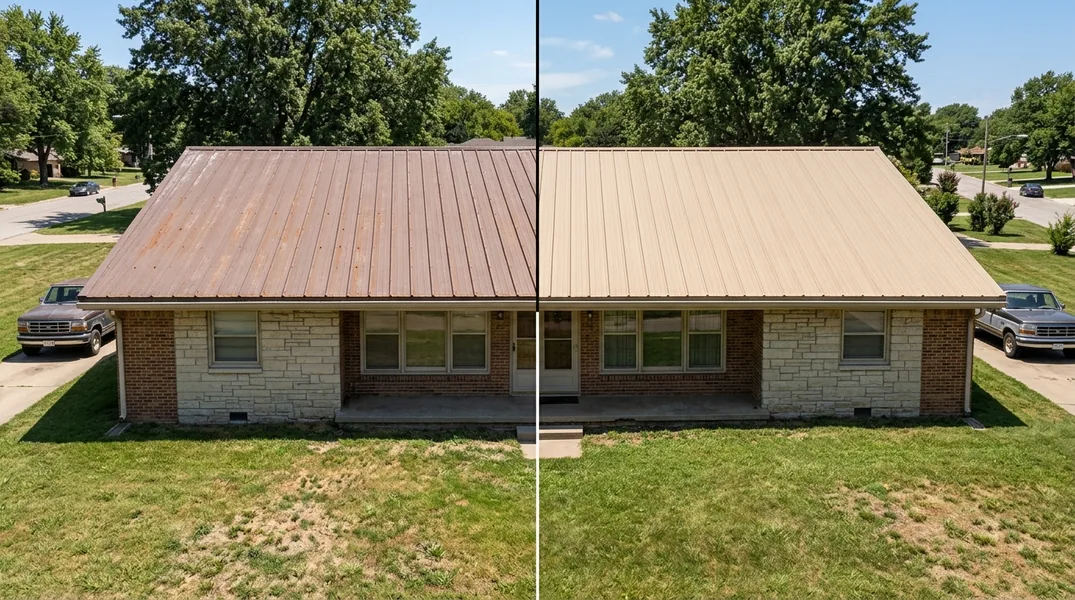
Why Topeka Homeowners Need a Hail Resistant Roofing Strategy
If you have lived in Topeka for more than a season or two, you already know the routine. The sky turns green, the sirens sound, and the next morning your neighborhood is full of roofing contractors knocking on doors. Kansas sits in the heart of Hail Alley, and Shawnee County regularly sees storms that drop golf-ball-sized hail, the kind that dents gutters, cracks vinyl siding, and shreds asphalt shingles.
For years, homeowners accepted that a hailstorm meant a new roof every decade or so, paid for by insurance claims and deductible checks. But more people are now asking a smarter question: what if the roof could simply survive the storm? That is where hail resistant roofing comes in. An impact resistant metal roof is engineered to absorb and deflect hail strikes instead of crumbling under them, which changes the entire math of home ownership in storm country.
How Metal Roofing Stands Up to Kansas Hail
The reason metal performs so well in hail is simple physics. Asphalt shingles are a brittle, granular product. When a hailstone hits, the impact fractures the mat underneath and knocks the granules loose, and that damage is often invisible from the ground until leaks appear months later. Metal, by contrast, is ductile. A quality Metal Roof Installation uses panels with enough thickness and structural backing to resist denting and puncturing from all but the most extreme hail.
Not all metal roofs are equal, though. The gauge of the steel, the type of panel, and the quality of the fastening system all determine how a roof handles impact. Products tested to UL 2218 Class 4, the highest impact resistance rating available, are specifically designed for hail country. Many insurers recognize that rating and offer premium discounts to homeowners who install them. When you are comparing options for hail damage metal roof protection in Topeka, ask specifically about Class 4 ratings and panel thickness, not just color and style.
Standing Seam vs. Other Metal Systems in Hail Country
For hail-prone regions, Standing Seam Metal Roofing is often the gold standard. The panels are attached with concealed fasteners, so there are no exposed screws for hail to strike or for water to work around. The raised seams add structural rigidity, helping the roof flex under impact rather than dent. Standing seam also sheds water and ice efficiently, which matters during the freeze-thaw cycles that follow so many Kansas storms.
Other systems, such as exposed-fastener panels, can also perform well when properly specified, and they often come in at a lower price point. The key is matching the product to your home, your budget, and your storm exposure. A reputable installer will walk you through the trade-offs honestly. If you have been searching for impact resistant metal roof options near me, the best first step is an on-site assessment that accounts for your roof pitch, your existing decking, and the specific hail history of your neighborhood.
The Insurance and Long-Term Cost Case for Metal
Homeowners in Shawnee County often assume metal is out of reach until they run the numbers over a full roof lifespan. Asphalt roofs in Hail Alley may need replacement every 10 to 15 years after repeated storm damage, and each replacement means another deductible and another round of insurance paperwork. A metal roof can last 40 to 70 years, which means it may be the last roof you buy for your home. When you factor in avoided claims and deductibles, the long-term picture often favors metal.
Beyond durability, many carriers offer discounts for Class 4 impact rated roofs, and some policies treat metal roofs more favorably because they are less likely to generate repeat claims. It is worth a call to your insurance agent before you decide. For a clearer picture of what a project would look like for your home, review our pricing information or reach out for a free estimate. We serve homeowners across Topeka and the surrounding communities, including Silver Lake and Auburn.
Retrofit or Full Replacement: Choosing the Right Path
If your current shingle roof is nearing the end of its life, you have two main paths. A full Metal Roof Replacement removes the old shingles, lets your installer inspect and repair the decking, and starts fresh with a system designed for decades of service. This is the most thorough option and the one we recommend when the existing roof has sustained repeated hail damage or is already leaking.
In some cases, a Metal Roof Over Shingles (Retrofit) can be a practical alternative. This approach installs metal panels over the existing roof, saving on tear-off costs and landfill waste. It works best when the current shingles are sound and the decking is in good shape. Either way, the goal is the same: a hail resistant roofing system that protects your home through the next storm season and the many seasons after that.
Metal Roof Installation Near Me: When to Call a Pro
After a major hailstorm, out-of-town crews often flood the area, offer quick inspections, and disappear before the first hard freeze. For a major investment like a metal roof, you want a local contractor who will still be here when you have questions in year five or year fifteen. Ask for proof of insurance, references from nearby homeowners, and details about the manufacturer warranty and workmanship coverage. A legitimate installer will welcome those questions.
If your roof has been through several Kansas hail seasons, or if you are simply tired of crossing your fingers every spring, it is time to talk to a professional. Call Topeka Metal Roofing at (785) 329-9753 to schedule an inspection and get a straightforward assessment of your options. We will explain what your current roof can handle, what a metal system would involve, and how to choose a hail resistant roofing solution that fits your home and your budget.
Looking for a professional metal roofing contractor in Topeka? Topeka Metal Roofing responds fast for all your metal roofing needs.
Get a Free QuoteOur services: Metal Roof Installation · Standing Seam Metal Roofing · Metal Roof Replacement